
Published by Vince Baker Ministries · Based on the teachings of Vince Baker ·
Jesus saw her before anyone asked Him to act
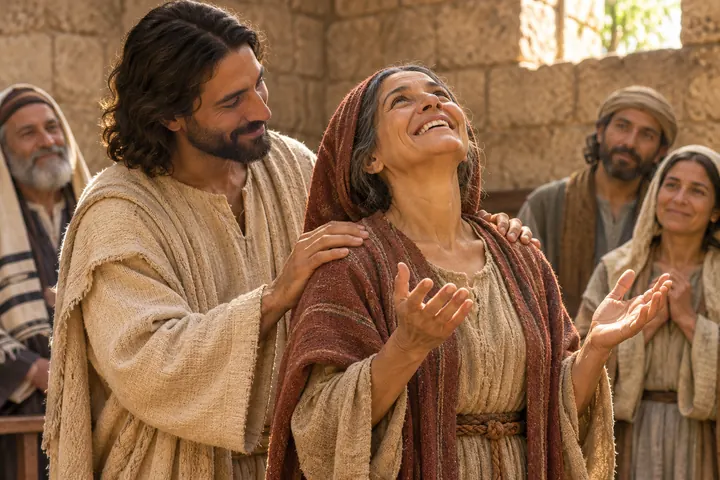
The woman in Luke 13 had been unable to stand upright for eighteen years. Jesus was teaching in a synagogue when He saw her and called her over. Luke records no speech from her before Jesus acts. He addresses her, lays His hands on her, and she immediately straightens and glorifies God.
Notice the order of the story. Jesus sees the woman. He speaks to her. Then He touches her. Before the congregation hears a debate about the Sabbath, it sees the Lord give His attention to a person who has endured years of suffering. For a reader who feels overlooked, that detail gives a concrete starting point for prayer. The One you are addressing knows your need, even when you struggle to find words for it.
Why the Sabbath matters in this healing story
The synagogue ruler tells the crowd that there are six days for work and that healing should take place on those days. Jesus answers with a familiar example. People untied their animals to lead them to water on the Sabbath. How much more fitting was it for this woman to be released from what had bound her?
Read Luke 13:15 and 16 side by side. The image of untying an animal gives force to the language of releasing the woman. The contrast also changes whose experience is at the center of the conversation. Jesus asks His hearers to weigh what eighteen years of suffering meant for her and why they could rejoice that it had ended. The passage finishes with the people rejoicing over the works He did.
What Jesus meant by calling her a daughter of Abraham
Jesus identifies her by her place among God’s people. The title daughter of Abraham gives her dignity in front of the people debating her healing. In the argument, it underscores why she should be treated with at least the practical concern the crowd already understood when caring for its animals.
Vince Baker’s public teaching on divine healing directs readers to the character of Jesus in the Gospel accounts. Luke 13 gives us a specific way to do that. Read for how Jesus speaks to the person, how He responds to criticism, and where He directs the attention of the crowd. Then compare the account with Acts 10:38, where Peter describes Jesus going about doing good and healing.
How to turn Luke 13 into a prayer for healing
Read Luke 13:10–17 slowly, and write down the action of Jesus that stands out to you. Then name your own need in one honest sentence. You can ask for healing, for strength to get through the day, and for wisdom for the next step. If you are praying for someone else, ask what support they would welcome. The compassion shown in this story can shape how you listen, pray, and follow through.
Pray in your own words, or begin here. Lord Jesus, You saw this woman and called her to You. I bring my need before You and ask for healing and strength. Give me wisdom for today, help me receive the support I need, and show me how to treat others with Your compassion. Amen.
Read the Scriptures
King James Version
Frequently asked questions
How long had the woman in Luke 13 been bent over?
Luke says the woman had endured her condition for eighteen years. In verses 12 and 13, Jesus calls her over and lays His hands on her, and she immediately straightens and glorifies God.
Where was Jesus when He healed the woman?
Luke 13:10 places Jesus in one of the synagogues, where He was teaching on the Sabbath. Luke does not name the synagogue.
What other Scriptures can I read when I want to pray for healing?
Jeremiah 17:14 gives words for a personal prayer. James 5:13–16 describes prayer with the church. Read them alongside Luke 13 to reflect on asking for help and caring for one another.